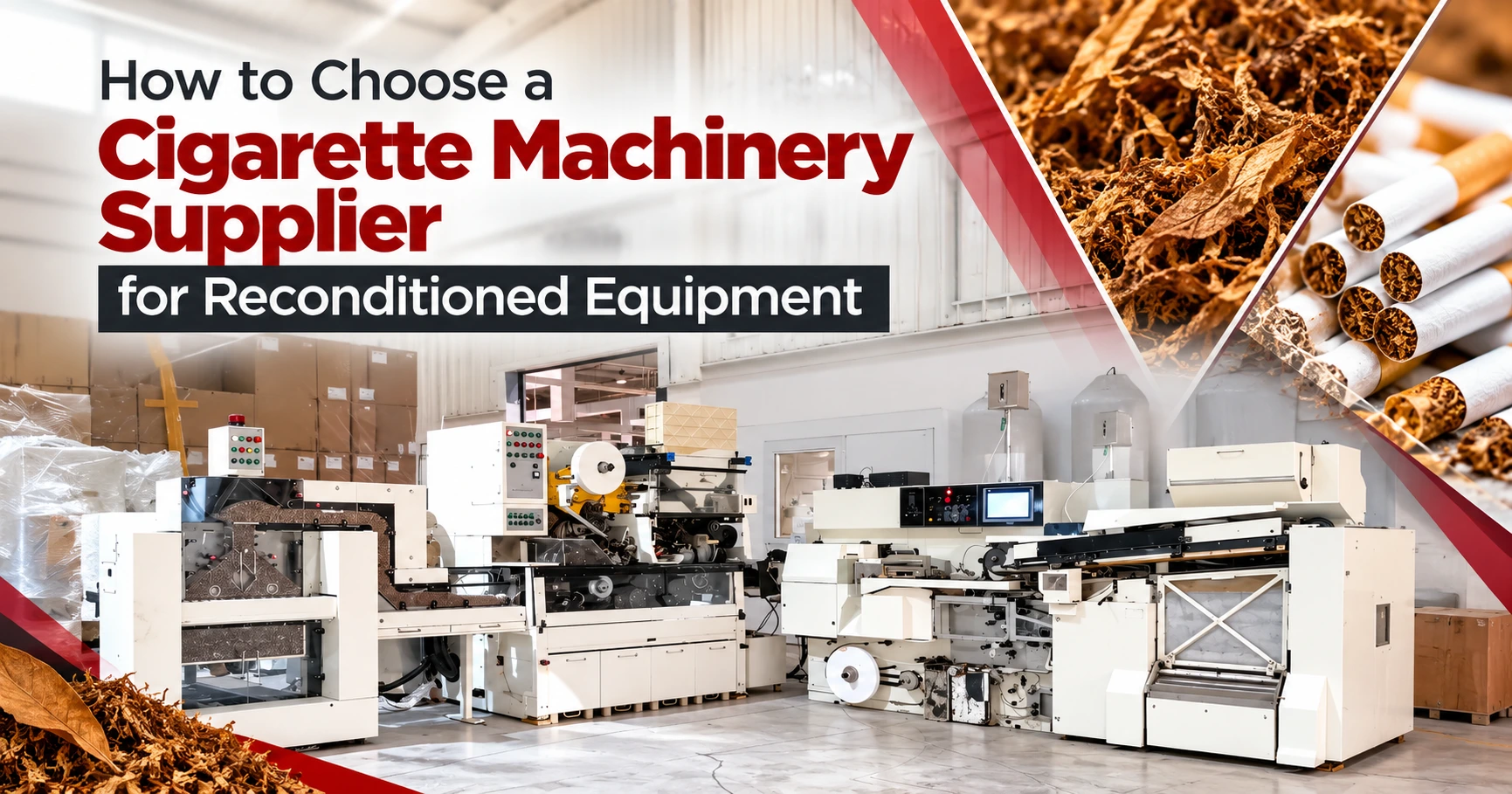
Explore how to choose a reliable cigarette machinery supplier for reconditioned equipment. Learn about machine inspection, spare parts, compatibility, maintenance costs, and after-sales support with Civic Tobacco Machinery in Pakistan.
Investing in manufacturing equipment requires careful planning, particularly when purchasing machinery that has previously been used in an industrial production environment. For businesses establishing a new facility, expanding an existing production line, or replacing ageing equipment, reconditioned machinery can offer an alternative to purchasing new machines.
However, the purchase price alone should not determine whether a machine is suitable. Buyers need to assess mechanical condition, operating performance, compatibility, spare-parts availability, and the level of technical support available after installation.
Choosing an experienced Cigarette Machinery Supplier can help manufacturers evaluate these factors and identify equipment that matches their production requirements and budget.
Civic Tobacco Machinery supplies new and carefully reconditioned cigarette and tobacco manufacturing equipment in Pakistan, with support for installation, machine setup, spare parts, and ongoing service.
What Is Reconditioned Cigarette Machinery?
Reconditioned machinery refers to previously used equipment that has undergone inspection, servicing, repairs, or component replacement to prepare it for further operation. The extent of this work can vary between machines and suppliers, so buyers should always request details of the work completed.
Some machines may require routine servicing and replacement of worn parts, while others may need more extensive mechanical or electrical restoration. Understanding the actual condition of a machine is therefore essential before making a purchasing decision.
Reconditioned equipment may be considered by manufacturers who want to expand production capacity while managing their capital investment. Its suitability depends on the machine's age, maintenance history, configuration, expected workload, and availability of replacement components.
Key Factors to Check Before Buying Reconditioned Tobacco Machinery
A structured evaluation can help manufacturers compare available machines and identify potential maintenance or integration issues before purchase.
1. Inspect the Mechanical Condition
Start by reviewing the machine's main mechanical assemblies, drive components, bearings, gears, belts, cutting mechanisms, and other parts relevant to its configuration.
Look for visible wear, corrosion, unusual movement, leakage, damaged components, and signs of previous repairs. A clean exterior does not necessarily indicate that internal components are in good condition.
Where possible, arrange a technical inspection by a qualified machinery specialist. The inspection should identify existing defects, components that may require replacement, and any maintenance work recommended before commissioning.
2. Review the Machine's Operating History
Maintenance records can provide useful information about how the machine was previously operated and serviced.
Ask the supplier for available details about the machine's service history, previous repairs, replaced components, operating hours, and reason for removal from its previous installation.
If complete records are unavailable, this should be taken into account when evaluating the equipment. An inspection and operational test become particularly important when the machine's history is uncertain.
3. Request an Operational Demonstration
Whenever practical, inspect the machine while it is running under suitable test conditions. A demonstration can help reveal issues that may not be apparent during a static inspection.
Observe machine stability, abnormal noise, vibration, control response, and the operation of relevant mechanisms. Check whether the machine performs consistently during the demonstration and whether its configuration matches the requirements discussed with the supplier.
Request documented test results where available, and clarify which components or functions have been tested.
4. Confirm Spare-Parts Availability
Spare-parts availability should be considered before purchasing any used industrial machine. A machine may be mechanically sound but difficult to maintain if essential replacement parts are obsolete or difficult to source.
Confirm the exact make, model, configuration, and control system. Ask which commonly required components are available, how replacement parts can be sourced, and whether technical assistance is available for maintenance and repairs.
Civic Tobacco Machinery focuses on established machinery brands, including Molins, HLP, SASIB, and the Protos family, selected with attention to practical servicing and parts availability.
5. Check Compatibility With Your Existing Production Line
A machine must work with the other equipment in the factory, not just meet its individual specifications.
For example, when adding a cigarette maker, manufacturers should evaluate its compatibility with filter-making or filter-attachment equipment and downstream packing machinery. Production rates, product formats, material flow, electrical requirements, and factory layout all need consideration.
A machine that exceeds the capacity of downstream equipment may create bottlenecks rather than improve overall output.
Before finalising a purchase, review the complete production workflow and identify any additional equipment, modifications, or installation work that may be required.
Comparing New and Reconditioned Machinery
Both new and reconditioned equipment can be suitable depending on the manufacturer's objectives. The important consideration is the overall value of the machine throughout its expected operating life.
The most suitable option depends on the intended production workload, available budget, maintenance capabilities, and long-term business plans. Manufacturers should compare the total expected ownership cost rather than relying exclusively on the initial purchase price.
Understanding the Total Cost of Ownership
The purchase price is only one part of the cost of acquiring industrial machinery. Buyers should also account for transportation, installation, electrical work, commissioning, operator training, spare parts, and routine maintenance.
For reconditioned equipment, an additional allowance may be necessary for repairs or component replacement identified during inspection.
A practical assessment should consider:
The agreed purchase price and included components.
Transportation and installation expenses.
Any outstanding servicing or repair requirements.
The cost and availability of critical spare parts.
Routine maintenance and technician support.
Compatibility with existing factory equipment.
This approach helps manufacturers compare machinery options more realistically and plan their investment with fewer unexpected expenses.
Why After-Sales Support Matters
Industrial machinery requires appropriate installation, adjustment, maintenance, and operator knowledge to perform as intended. Purchasing a machine without considering these requirements can create difficulties after delivery.
Before selecting a supplier, establish what support is available for installation, initial setup, technical troubleshooting, spare-parts sourcing, and ongoing maintenance.
Manufacturers should also ensure that operators and maintenance personnel understand the equipment's operating procedures and safety requirements. Regular inspections and maintenance records help teams identify emerging problems and plan servicing.
For businesses operating in Pakistan, working with a supplier based locally may simplify communication and coordination when technical assistance is needed.
Why Consider Civic Tobacco Machinery in Pakistan?
Civic Tobacco Machinery is based in Karachi's SITE industrial estate and supplies new and carefully reconditioned equipment for cigarette and tobacco manufacturing facilities.
Our range includes cigarette-making machines, filter-making equipment, cigarette packing machines, wrapping and boxing machinery, and supporting tobacco processing equipment.
We work with recognised equipment brands, including Molins, HLP, SASIB, and the Protos family. Our approach focuses on understanding the customer's requirements, reviewing available equipment options, and helping match machines to the intended production setup.
We also assist with installation coordination, machine setup, spare-parts requirements, and after-sales support. Buyers can discuss their production needs, preferred machine configuration, and investment budget before selecting suitable equipment.
Frequently Asked Questions
1. Is reconditioned cigarette machinery suitable for a manufacturing facility?
It can be suitable when the machine's condition, production capability, maintenance requirements, and compatibility have been properly evaluated. Buyers should request an inspection, available service records, and an operational demonstration where practical.
2. What should I check before purchasing a used cigarette-making machine?
Review the mechanical and electrical condition, maintenance history, machine configuration, control systems, spare-parts availability, and operating performance. Also confirm whether installation and any necessary repairs are included in the purchase arrangement.
3. Can reconditioned machinery reduce equipment costs?
Reconditioned machinery may have a lower initial purchase price than comparable new equipment. However, the overall financial benefit depends on its condition, expected maintenance expenses, installation requirements, and remaining useful life.
4. Why should I work with an experienced Tobacco Machinery Supplier?
An experienced supplier can help buyers understand machine specifications, evaluate compatibility, identify relevant equipment options, and plan for installation and maintenance. Buyers should also verify the supplier's support arrangements and the condition of the specific machine being offered.
5. Does Civic Tobacco Machinery offer installation and spare-parts support?
Civic Tobacco Machinery assists customers with machine installation and setup, spare-parts requirements, and after-sales service arrangements. Contact the team to discuss the support available for your selected equipment.
Conclusion
Reconditioned machinery can be a practical option for manufacturers looking to expand or update their production facilities while managing capital expenditure. The key is to evaluate each machine carefully, review its operating history, confirm parts availability, and account for installation and maintenance costs before purchasing.
Working with a reliable Tobacco Machinery Supplier can help manufacturers assess available equipment and plan for long-term operational requirements.
Civic Tobacco Machinery supplies new and carefully reconditioned cigarette and tobacco machinery in Pakistan, supported by local installation coordination, spare-parts assistance, and after-sales service. Contact our team to discuss your production requirements and explore suitable equipment options.
Kashif Ali
CEO - Civic Tobacco Machinery
The CEO of Civic Tobacco Machinery brings over 20 years of experience in the tobacco machinery industry, helping manufacturers find reliable equipment solutions. With a strong focus on technical expertise, quality, and customer satisfaction, he is committed to supporting businesses in meeting their production needs.