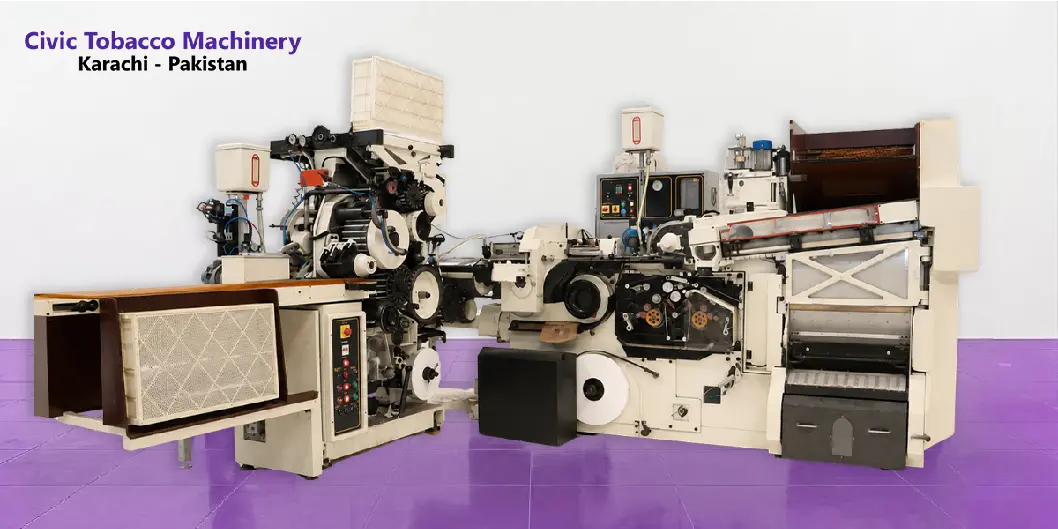
Buying a cigarette making machine is one of the biggest decisions a tobacco manufacturer will make. The machine you choose determines your output capacity, the formats you can produce, and how much flexibility you have as your business grows. Get it wrong, and you're either stuck with a machine that can't keep up with demand or one that's far more than a start-up operation actually needs.
If you're comparing options for the first time, here's what actually matters when choosing a cigarette making machine, and how to match a machine to your production line rather than just picking the fastest or cheapest option available.
Start With Your Production Volume, Not the Machine's Top Speed
It's tempting to look at a spec sheet and go straight for the highest number. A machine like the Molins Mark 8D MAX 15, for example, runs at 3,000 cigarettes per minute, which sounds impressive on paper. On the higher end still, machines like the Protos 70 and Protos 80 ER run up to 7,000 and 8,000 cigarettes per minute. But that speed only matters if your factory has the packing line, staffing, and raw material supply to actually use it.
Before comparing machines, work backward from your real production targets:
What's your realistic daily or monthly output goal for the next 12 to 24 months? Are you running one shift or multiple shifts? Does your packing capacity match your making capacity, or will one become a bottleneck for the other?
A dependable mid-range option like the Molins Mark 8 Post 64, running at 1,800 to 2,000 cigarettes per minute, is often a better starting point for smaller or growing operations, while a high-speed line like the Mark 8D or a Mark 9.5 suits factories that need to run at scale from day one.
Check Cigarette Size and Format Compatibility
Not every machine handles every cigarette format. If you plan to produce more than one size, such as King, Demi, Slims, Super Slims, or Nano, confirm the machine supports that range before you commit. The Mark 8D MAX 15 and the Mark 8 Post 64 both cover King through Nano formats, which gives a manufacturer room to expand their product line without needing a second machine.
If your business plan includes launching multiple SKUs across different formats, format flexibility should weigh as heavily in your decision as raw speed.
Confirm Circumference and Rod Length Range
Two specifications get overlooked far too often: cigarette circumference and filter plus tobacco rod length. These numbers determine what you can physically produce on a given machine.
As a reference point, both the Mark 8 Post 64 and Mark 8D MAX 15 support a circumference range of 17mm to 28.3mm and a rod length range of 65mm to 110mm. If a machine's range doesn't cover the products you intend to sell, no amount of speed or automation will make up for it. Always check these figures on the full machine specification pages before comparing anything else.
Factor In Power, Space, and Infrastructure
A high-output machine needs the infrastructure to support it. The Mark 8D MAX 15, for example, draws 17KW of power and weighs around 5,000 kg, while the Mark 8 Post 64 weighs approximately 3,500 kg. That has real implications for your factory layout, electrical capacity, and even the flooring and foundation the machine sits on.
Before finalizing a purchase, confirm:
Your facility's available power supply can handle the machine's draw You have adequate floor space for the machine, its infeed unit, and surrounding workflow Your factory layout allows for maintenance access, since these machines need regular servicing to run reliably
Skipping this step is one of the most common reasons new manufacturers face costly delays after a machine has already been purchased and shipped.
Match the Making Machine to Your Packing Line
A cigarette making machine doesn't operate in isolation. If your making machine outpaces your packing line, or the other way around, you'll end up with a bottleneck no matter how good either individual machine is. When you're choosing a making machine, check its output against your packing line's capacity, whether that's the HLP-180, HLP-200, or the higher-output HLP-225, running at 180, 200, and 225 packs per minute respectively.
Getting this balance right at the planning stage saves you from having to upgrade one machine shortly after installing the other.
New vs. Used: Weigh the Trade-Offs Honestly
Budget plays a real role in this decision, and there's nothing wrong with considering a used machine, especially for a first-time manufacturer testing the market. That said, a used machine needs closer scrutiny:
Ask for full maintenance and service history Confirm availability of spare parts and ongoing technical support Have the machine inspected or request detailed video documentation before purchase if you can't view it in person
New machines cost more upfront but typically come with manufacturer support and fewer unknowns. Neither option is automatically the right answer. It depends on your budget, timeline, and risk tolerance.
Work With a Supplier Who Understands the Full Setup
Choosing the right machine isn't just about the equipment itself. It's also about who you're buying from. A supplier who only sells machines gives you a spec sheet and a shipping date. A supplier who understands cigarette manufacturing end-to-end can help you think through machine compatibility, factory layout, and long-term scalability before you spend a single dollar.
At Civic Tobacco Machinery, we work with start-up and established tobacco manufacturers to match the right cigarette making and packing machines to their actual production needs, not just the biggest number on a spec sheet. If you're evaluating machines like the Mark 8 Post 64, Mark 9.5, or Mark 8D MAX 15 and want guidance on what fits your production line, reach out to us on WhatsApp and we'll walk through it with you.
Saad Ali
Tobacco Machinery Specialists, Karachi
Civic Tobacco Machinery supplies new and reconditioned cigarette manufacturing, packing, wrapping and used tobacco machinery across Pakistan.